Kapalbhati Pranayama: How to Practice It, What It Does, and Who Should Avoid It
Few yoga practices are as popular, or as misunderstood, as Kapalbhati. You see it on TV, in park groups, and in viral videos promising a flat stomach, glowing skin, and a cure for everything. The reality is more modest and more interesting. Done correctly, Kapalbhati is a powerful cleansing breath that wakes up the body and sharpens the mind. Done carelessly, it can leave you dizzy, strained, or worse.
This guide covers what Kapalbhati is, how to do it step by step, what it can realistically offer, and the precautions most beginners skip.
What Is Kapalbhati?
Kapalbhati comes from two Sanskrit words: kapal, meaning skull or forehead, and bhati, meaning to shine or illuminate. It is often translated as “skull-shining breath.”
In classical hatha yoga texts, Kapalbhati is listed as one of the shatkarmas, the six cleansing practices meant to purify the body before deeper meditation and pranayama. Today it is usually taught as a breathing exercise rather than a purification technique.
What makes it unusual is that the breath is active on the exhale and passive on the inhale. In normal breathing, the inhale takes effort and the exhale is relaxed. In Kapalbhati, you flick the air out with a sharp contraction of the lower abdomen, and the inhale happens by itself as the belly relaxes.
Kapalbhati vs. Bhastrika
People often confuse the two. Both are rapid breathing practices, but they differ in an important way.
- Kapalbhati: forceful exhale, passive inhale. Short, sharp pulses.
- Bhastrika (bellows breath): forceful exhale and forceful inhale, using the chest and diaphragm more fully.
Kapalbhati is generally considered the gentler of the two and is the better starting point.
Potential Benefits
Be skeptical of anything that claims Kapalbhati cures diabetes, cancer, or heart disease. The research is limited, often small in scale, and rarely conclusive. Here is what practitioners commonly report and what is reasonable to expect.
1. Increased alertness and mental clarity. The rhythmic, energetic breathing is stimulating. Many people use it as a morning replacement for a second cup of tea, and some studies on short-term attention and cognitive tasks after pranayama show modest improvements.
2. Stronger core awareness. Because the exhale comes from the lower abdomen, you learn to engage and release the abdominal muscles on command. This does not replace strength training, but it builds awareness of the deep core.
3. Clearer breathing. The forceful exhale can feel like it clears the nasal passages and airways. Some people with mild congestion find it refreshing, though it is not a treatment for any respiratory condition.
4. A calmer mind afterward. The surprising part is the stillness after the practice. Once you stop and breathe normally, there is often a quiet, spacious feeling. This is why Kapalbhati is traditionally followed by meditation or slow breathing.
5. Support for digestion. The rhythmic abdominal movement massages the abdominal organs, and many practitioners find it helps with sluggish digestion. Treat this as a supportive habit, not a medical remedy.
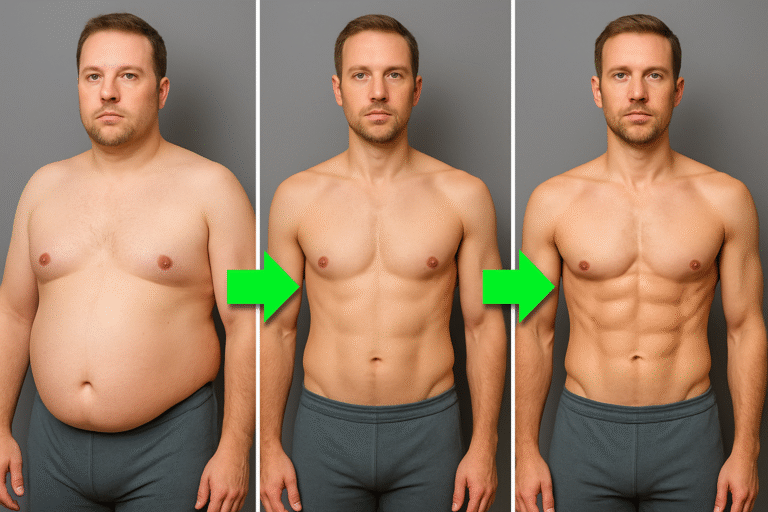
6. A useful part of an active lifestyle. Combined with sleep, diet, and exercise, it can be one small piece of a healthier routine. It will not burn meaningful fat on its own, and claims about “reducing belly fat in 7 days” are marketing, not physiology.
Before You Begin
- Empty stomach. Practice 3 to 4 hours after a meal, or first thing in the morning. A full stomach plus abdominal pumping is uncomfortable and can cause nausea.
- Empty bowels and bladder.
- Quiet, ventilated space. Fresh air matters since you are breathing rapidly.
- Loose clothing around the waist.
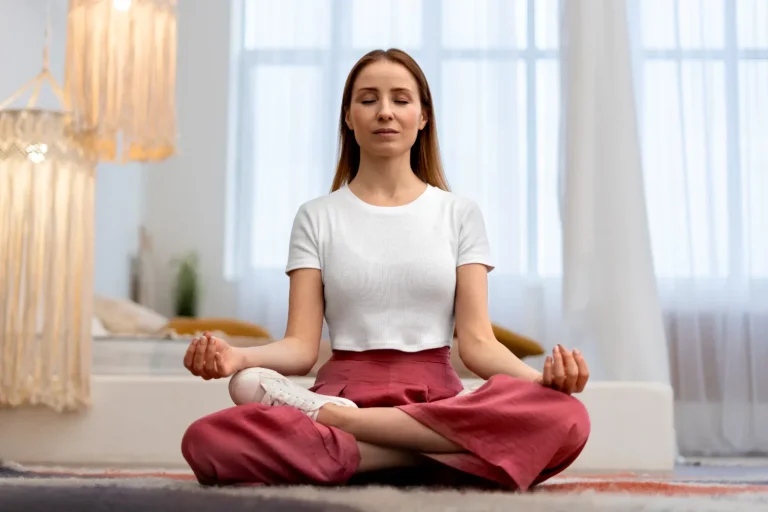
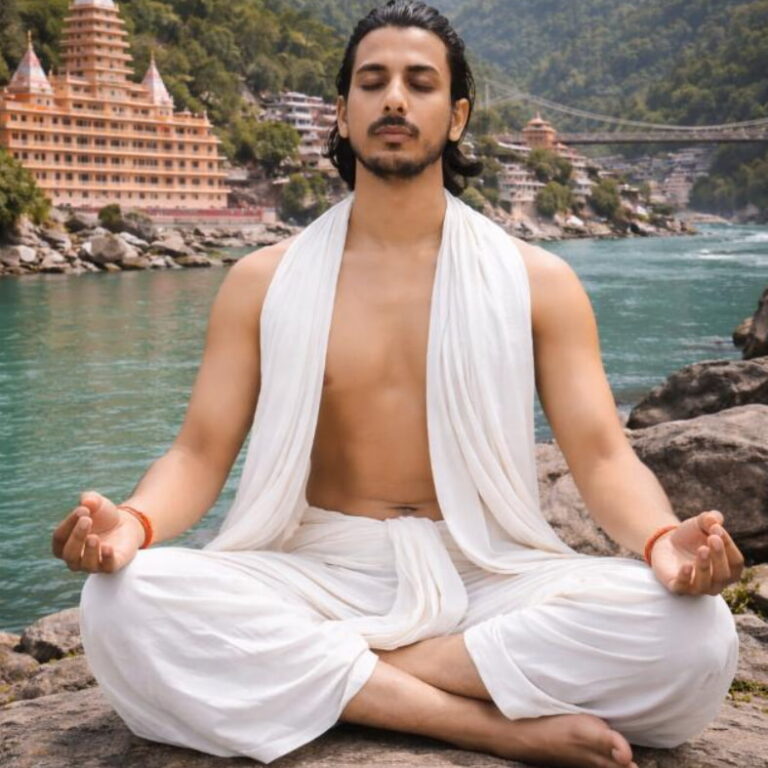
- A comfortable seat. Sit on a mat or folded blanket in Sukhasana (easy pose), Padmasana (lotus), or Vajrasana (thunderbolt pose). If sitting on the floor is hard, sit upright on a chair with your feet flat.
Step-by-Step Technique
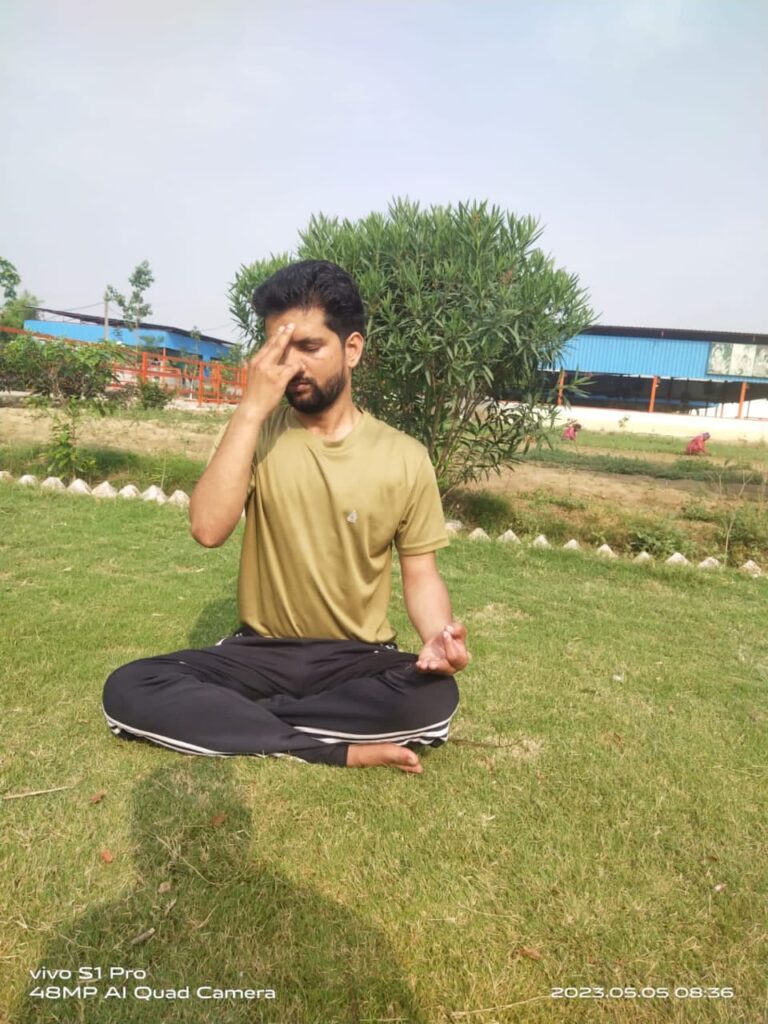
- Sit tall. Keep your spine straight, shoulders relaxed, and chin level. Rest your hands on your knees in Gyan Mudra (thumb and index finger touching) or simply palms up.
- Close your eyes and take two or three slow, deep breaths to settle.
- Place one hand on your lower belly for the first few attempts. This helps you feel the movement.
- Inhale deeply through both nostrils, filling the lungs comfortably.
- Exhale sharply through the nose by pulling the lower belly toward the spine in a quick contraction. The sound should be a short, crisp puff of air.
- Let the belly relax and spring back. The inhale happens on its own. Do not try to suck air in.
- Repeat at a steady rhythm. Beginners should aim for about one stroke per second. With practice, you may speed up, but never at the cost of control.
- After one round (about 20 strokes for beginners), stop. Take a deep breath in, hold briefly if comfortable, and exhale slowly. Rest for 30 to 60 seconds with normal breathing.
- Complete 3 rounds to begin with.
A Sensible Progression
- Week 1 to 2: 3 rounds of 20 strokes
- Week 3 to 4: 3 rounds of 30 to 40 strokes
- Month 2 onward: 3 rounds of 50 to 100 strokes, if you feel comfortable
- Advanced practitioners: may extend further, ideally under a qualified teacher’s guidance
Longer is not better. Quality of technique matters far more than the number of strokes.
Common Mistakes
Moving the chest and shoulders. If your shoulders hop or your chest heaves, you are using the wrong muscles. The movement should be low in the belly. Practice with a hand on your abdomen and a mirror if needed.
Forcing the inhale. The inhale should be effortless. If you are gulping air in, you are turning it into something else and straining the lungs.
Going too fast, too soon. Speed comes after control. A slow, clean stroke beats a fast, sloppy one every time.
Tensing the face and neck. Keep your jaw, forehead, and neck relaxed. Facial tension is a sign you are pushing too hard.
Ignoring dizziness. Lightheadedness, tingling, or a pounding head means stop. Do not “push through” it.
Practicing on a full stomach. This is the most common reason beginners feel nauseous.
Who Should Avoid Kapalbhati
This is the section most blogs rush past, and it matters most. Kapalbhati raises pressure inside the abdomen and chest and changes blood flow. The following people should avoid it, or practice only with medical approval and expert supervision:
- High blood pressure or heart disease
- Pregnancy. Avoid it entirely.
- During menstruation, if you feel discomfort. Many teachers recommend resting during heavy days.
- Hernia of any kind
- Recent abdominal or chest surgery
- Stomach or intestinal ulcers, or acid reflux flare-ups
- Epilepsy or a history of seizures
- Glaucoma, retinal problems, or recent eye surgery
- Vertigo or frequent dizziness
- Chronic respiratory conditions such as severe asthma or COPD, unless cleared by a doctor
- Slipped disc or serious back problems
- Stroke history or aneurysm
If you have any ongoing health condition, talk to your doctor before starting. A yoga teacher is not a substitute for medical advice.
Stop immediately if you feel chest pain, severe dizziness, nausea, or a sharp headache.
Best Time and How to Fit It Into Your Day
The ideal time is early morning, ideally after freshening up and before breakfast. The practice is energizing, so avoid doing it late at night, when it may make it harder to fall asleep.
A simple 15-minute sequence could look like this:
- 2 minutes of gentle neck and shoulder rolls
- 3 rounds of Kapalbhati
- 5 minutes of slow, deep belly breathing or Anulom Vilom (alternate nostril breathing)
- 5 minutes of silent sitting
Pairing it with calming practices afterward lets you enjoy the stimulation without being left wired or scattered.
A Few Practical Tips
- Learn from a teacher first, at least for a session or two. Technique errors are hard to spot on your own.
- Keep water nearby but do not drink during the rounds.
- Practice consistently rather than intensely. Ten focused minutes daily beats an hour once a week.
- Notice how you feel afterward. A good session leaves you alert and calm. If it leaves you drained, dizzy, or irritable, reduce the strokes or take a break.
- Be patient with the belly. Control of the abdominal contraction takes a couple of weeks to develop. Almost everyone feels clumsy at first.
The Bottom Line
Kapalbhati is not a miracle cure, and it does not need to be. It is a simple, free, and effective way to wake up your body, sharpen your focus, and build awareness of your breath and core. The real value comes from practicing it correctly, respecting its limits, and treating it as one tool in a broader routine of movement, rest, and mindful living.
Start slowly, keep the technique clean, and listen to your body. If something feels wrong, stop. The “shining” in Kapalbhati should come from clarity, not strain.
Join our Personal Yoga classes at home to learn Kapalbhati pranayama all variation and also know about this Pranayama in detail
This article is for general information and is not medical advice. Consult a qualified healthcare professional before starting any breathing practice, especially if you have a medical condition.
What Does the Research Say About Kapalbhati?
Research on Kapalbhati is growing, but most studies are small, short-term, and done on healthy volunteers. Here is what the evidence shows so far, with links to the sources.
1. It may improve lung function and attention. A systematic review of Kapalbhati studies found consistent signs of improved pulmonary function, possibly through stimulation of stretch receptors in the lungs, and better cognitive performance through lower anxiety and sharper attention. The authors also say more research is needed to validate these mechanisms.
Source: Yogic Bellows, Neural Sparks: A Systematic Review (PubMed) nih
2. It affects the heart’s autonomic balance, with a rebound afterwards. In a randomized study of 50 healthy volunteers, the parasympathetic (rest-and-digest) system dipped right after Kapalbhati. Twenty minutes into recovery, parasympathetic dominance showed up in the practice group. This fits the calm, still feeling many people report after the practice. The authors say further studies are needed to confirm it.
Source: Immediate effect of Kapalbhathi pranayama on short-term HRV (PubMed) nih
3. Even five minutes changes brain and heart activity. One comparative study looked at how exercise and a supervised five-minute Kapalbhati session affect heart rate variability and EEG activity. It found distinct HRV responses to the two, and called for larger and more diverse samples to confirm the results.
Source: Comparative Analysis of Exercise and Kapalbhati on HRV and EEG (PubMed) nih
4. Blood pressure and heart rate rise during the practice. In a study of 20 healthy people, Kapalbhati produced a significant increase in systolic and diastolic blood pressure, mean arterial pressure, heart rate, and cardiac output. This is why the practice is not advised for people with hypertension or heart disease.
Source: Cardiovascular Functions During Different Yogic Breathing Techniques (PubMed) nih