
Anulom Vilom Pranayama:-
Anulom Vilom Pranayama: Steps, Benefits, Research, and Precautions
Ask ten yoga teachers which breathing practice to start with, and most will say Anulom Vilom. It is simple, free, takes no equipment, and works for most ages and fitness levels. It is also one of the most frequently done wrong. People rush it, force it, or add breath-holding before they are ready.
This guide covers what Anulom Vilom is, how to do it step by step, what the research says, and the mistakes and precautions worth knowing.
What Is Anulom Vilom?
In Sanskrit, anulom means “with the grain” and vilom means “against the grain.” The name reflects the breath flowing in one direction through one nostril and back the other way through the other nostril.
In simple terms, you breathe in through one nostril, breathe out through the other, then reverse. It is also called alternate nostril breathing. A systematic review of clinical trials describes Anulom-vilom, alternate nostril breathing and Nadi Shodhana as one common yogic technique, done by breathing through one nostril at a time while manually closing the other. Many teachers treat the names as interchangeable, though some use “Nadi Shodhana” for the version with breath retention and set ratios.
Anulom Vilom vs. Kapalbhati
People often practice them together, but they do opposite jobs.
- Kapalbhati: fast, forceful exhales. Stimulating.
- Anulom Vilom: slow, smooth, controlled breaths. Calming.
A common sequence is Kapalbhati first to wake up, then Anulom Vilom to settle the mind.
Potential Benefits
Be skeptical of claims that Anulom Vilom cures blocked arteries, thyroid disease, or cancer. The honest list is shorter, but still worthwhile.
1. Calmer mind and less stress. Slow, even breathing with deliberate attention gives the mind one thing to follow. Many people notice a clear drop in mental chatter within a few minutes.
2. Better focus. Regular practitioners often report sharper concentration, which is why it is popular before study, work, or meditation.
3. A more relaxed heart and breathing rhythm. Slow breathing tends to shift the body toward the rest-and-digest state. The research section below covers this.
4. Awareness of your breath. Most of us breathe shallowly and unconsciously. This practice teaches you to notice and control the pace.
5. A better wind-down before sleep. Done gently in the evening, it can help the body slow down. Do not expect it to fix serious insomnia on its own.
6. A comfortable start to meditation. Five minutes of Anulom Vilom settles the mind enough to sit quietly afterward.
Before You Begin
- Empty or light stomach. Practice 2 to 3 hours after a meal, or first thing in the morning.
- Quiet, ventilated space. Fresh air and minimal distraction help.
- Clear nose. If one nostril is blocked, blow your nose first, or practice another day.
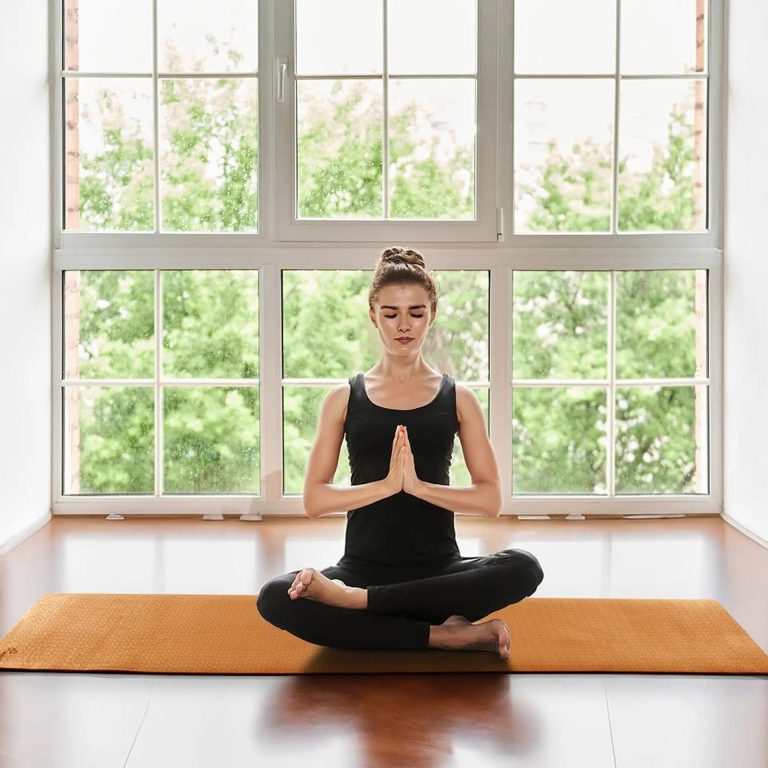
- Comfortable seat. Sit in Sukhasana, Padmasana, or Vajrasana. If the floor is hard, sit upright on a chair with feet flat.
- Loose clothing around the waist and chest.
Step-by-Step Technique
- Sit tall with a straight spine, relaxed shoulders, and soft face. Close your eyes.
- Left hand: rest it on your left knee in Gyan Mudra (thumb and index finger touching).
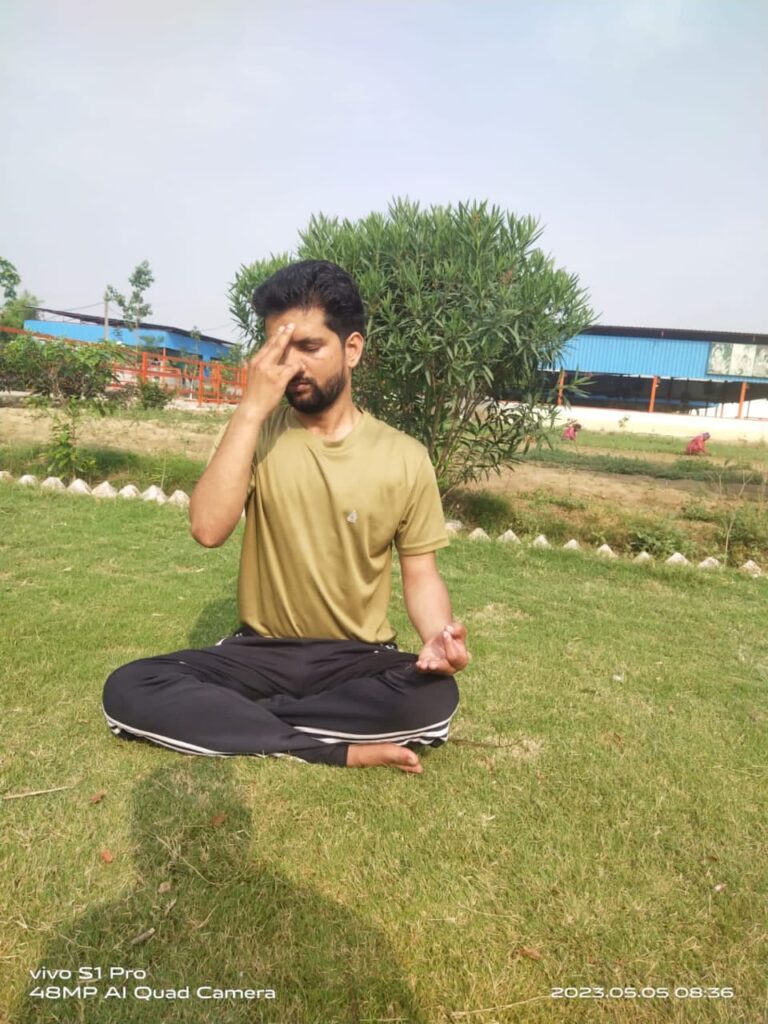
- Right hand: use Nasika Mudra. Fold your index and middle fingers into the palm. Your thumb will close the right nostril and your ring finger the left.
- Exhale fully through both nostrils to begin.
- Close the right nostril with your thumb. Inhale slowly through the left for a count of 4.
- Close both nostrils briefly. Beginners should skip any breath-holding or keep it very short.
- Release the right nostril and exhale slowly through the right for a count of 4 to 8.
- Inhale through the right for 4 counts.
- Close the right, open the left, and exhale through the left.
- That is one round. Continue for 5 to 10 rounds to begin with.
A Sensible Progression
- Week 1 to 2: 5 rounds, 4-count inhale, 4-count exhale, no holding
- Week 3 to 4: 8 to 10 rounds, 4-count inhale, 6-count exhale
- Month 2 onward: 10 to 15 minutes daily, exhale gradually extended toward twice the inhale
- Breath retention: introduce only after weeks of comfortable practice, ideally under a teacher
The breath should always feel smooth and quiet. If you hear it strongly or feel strain, slow down.
Common Mistakes
Forcing the breath. Deep and slow is not the same as hard. Any sense of gasping or strain means you are overdoing it.
Pinching the nose. Use a light touch. Pressing hard creates facial tension and uneven airflow.
Holding the breath too soon. Retention raises pressure in the chest and is not for beginners.
Lifting the shoulders. Breathe into the belly and lower ribs, not the upper chest.
Making noise. A rasping or whistling sound usually means the breath is too forceful.
Rushing the count. Speed defeats the purpose. Slower is almost always better.
Practicing while congested. Forcing air through a blocked nostril is uncomfortable and unproductive.
Who Should Be Careful
Anulom Vilom is gentle, but a few groups should take care:
- High or low blood pressure, or heart disease. Practice without breath retention, keep it slow and relaxed, and check with your doctor first.
- Pregnancy. Gentle breathing without holding is generally fine. Get your doctor’s approval first.
- Asthma or other respiratory conditions. Keep sessions short and gentle. Stop if you feel breathless.
- Recent surgery or illness. Wait for medical clearance.
- Anxiety or panic tendencies. Breath focus can sometimes increase discomfort. Keep sessions short, skip retention, and stop if you feel worse.
Stop immediately if you feel dizzy, lightheaded, chest tightness, or unusual discomfort. A yoga teacher is not a substitute for medical advice.
Best Time and How to Fit It Into Your Day
Early morning is ideal, on an empty stomach, in fresh air. Evening practice also works, especially to wind down. Avoid practicing right after a heavy meal.
A simple 15-minute routine:
- 2 minutes of gentle neck and shoulder rolls
- 5 minutes of Kapalbhati (if suitable for you)
- 5 minutes of Anulom Vilom
- 3 minutes of silent sitting
If you only have five minutes, do Anulom Vilom alone. That is still enough to feel the effect.
A Few Practical Tips
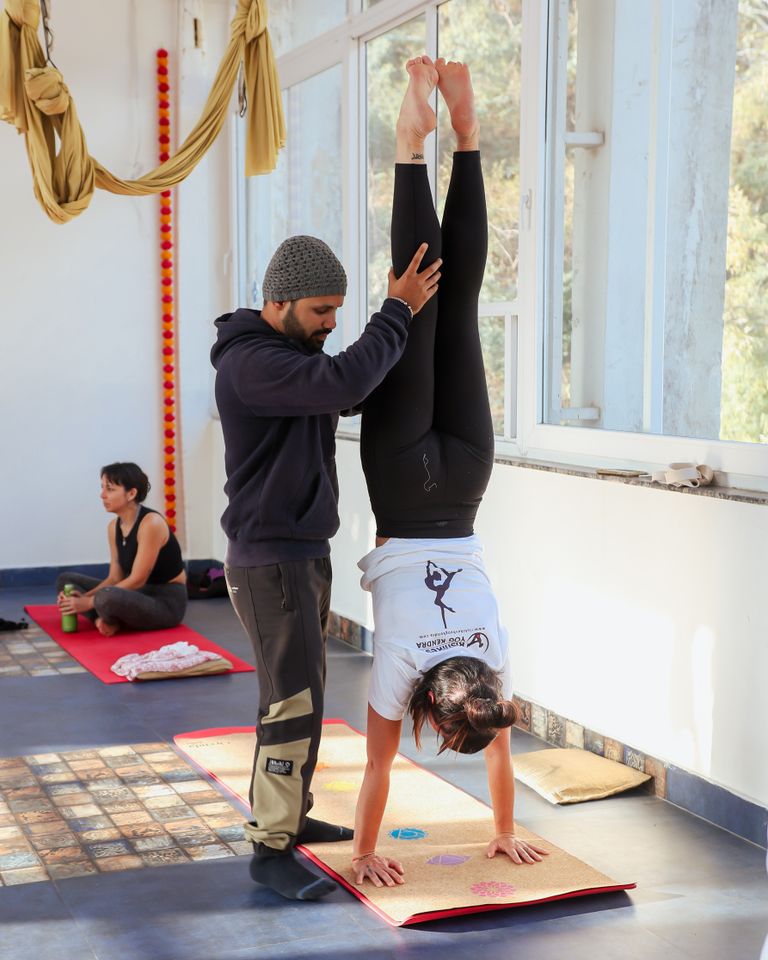
- Learn from a teacher for a session or two. Small technique errors are easy to miss alone.
- Practice daily, even briefly. Ten minutes every day beats an hour once a week.
- Count silently to keep your mind anchored.
- Do not chase results. Treat it as a daily reset, not a cure.
- Stay relaxed. Soft face, soft belly, soft shoulders.
The Bottom Line
Anulom Vilom is not a miracle cure, and it does not need to be. It is a simple, free practice that settles the mind, builds breath awareness, and appears to nudge the body toward a calmer state. The research is encouraging but still limited, and the best results come from gentle, consistent practice done with correct technique.
Start slowly, keep the breath smooth, and stop if anything feels wrong. The goal is calm, not effort.
What Does the Research Say?
Research on alternate nostril breathing is growing, but most studies are small and short-term. Here is what the evidence shows, with links to the sources.
1. A systematic review covers the clinical trials. One review pulled together trials on alternate nostril breathing, including studies on heart rate variability, reaction time, cardiac output, respiratory function, and autonomic function in healthy young adults.
Source: Alternate nostril breathing: a systematic review of clinical trials
2. It may lower blood pressure immediately. In a randomized controlled study of 132 normotensive adults, systolic and diastolic blood pressure dropped significantly after the Chandra anulom vilom and alternate nostril groups compared with the Surya anulom vilom group, and mean arterial pressure was lower in the alternate nostril group than in the control group. This study covered people with normal blood pressure, so it is not proof of a treatment for hypertension.
Source: Immediate Hemodynamic Changes during Slow Uninostril and Alternate Nostril Breathing (International Journal of Yoga, 2024) doaj
3. Three months of practice lowered resting heart rate. Participants practiced alternate nostril breathing under supervision for three months, and the study found a statistically significant decrease in heart rate and diastolic blood pressure afterward. The participants were medical students, so the results may not apply to everyone.
Source: Effect of alternate nostril breathing (Anuloma-Viloma) on cardiovascular autonomic functions who
4. It has been tested in people with no yoga experience. A study of 20 healthy volunteers looked at alternate nostril breathing and heart rate variability in people with no prior yogic breathing experience, to remove the influence of long-term adaptation. The researchers compared it with paced breathing at five breaths per minute.
Source: Influence of alternate nostril breathing on heart rate variability in non-practitioners (PMC) nih
5. It is being explored for nasal and sinus health. A randomized single-center study set out to evaluate Anuloma-Viloma Pranayama in resolving clinical features of rhinosinusitis, using mucociliary clearance time to measure nasal health. Treat this as early-stage research, not a replacement for medical treatment.
Source: Endoscopic evaluation of therapeutic effects of Anuloma-Viloma Pranayama in Pratishyaya (PMC) nih