Top 5 Pranayama to Calm the Mind
Top 5 Pranayama to Calm the Mind and Relax the Body
A racing mind rarely responds to “just relax.” What does work for many people is changing the breath, because breath is the one part of the stress response you can control directly. Slow it down, lengthen the exhale, and give your attention something steady to follow, and the mind often settles on its own.
This guide covers five calming pranayama practices, how to do each one, what the research says, and how to get started safely.
Why Breathing Calms the Mind
Stress speeds up and shortens your breath. Slow, controlled breathing signals the opposite: that there is no emergency. The practices below all share three features: a slow pace, a smooth rhythm, and a gentle focus of attention. None of them require force.
Avoid the fast, forceful techniques (Kapalbhati and Bhastrika) when your goal is calm. They energize rather than relax.
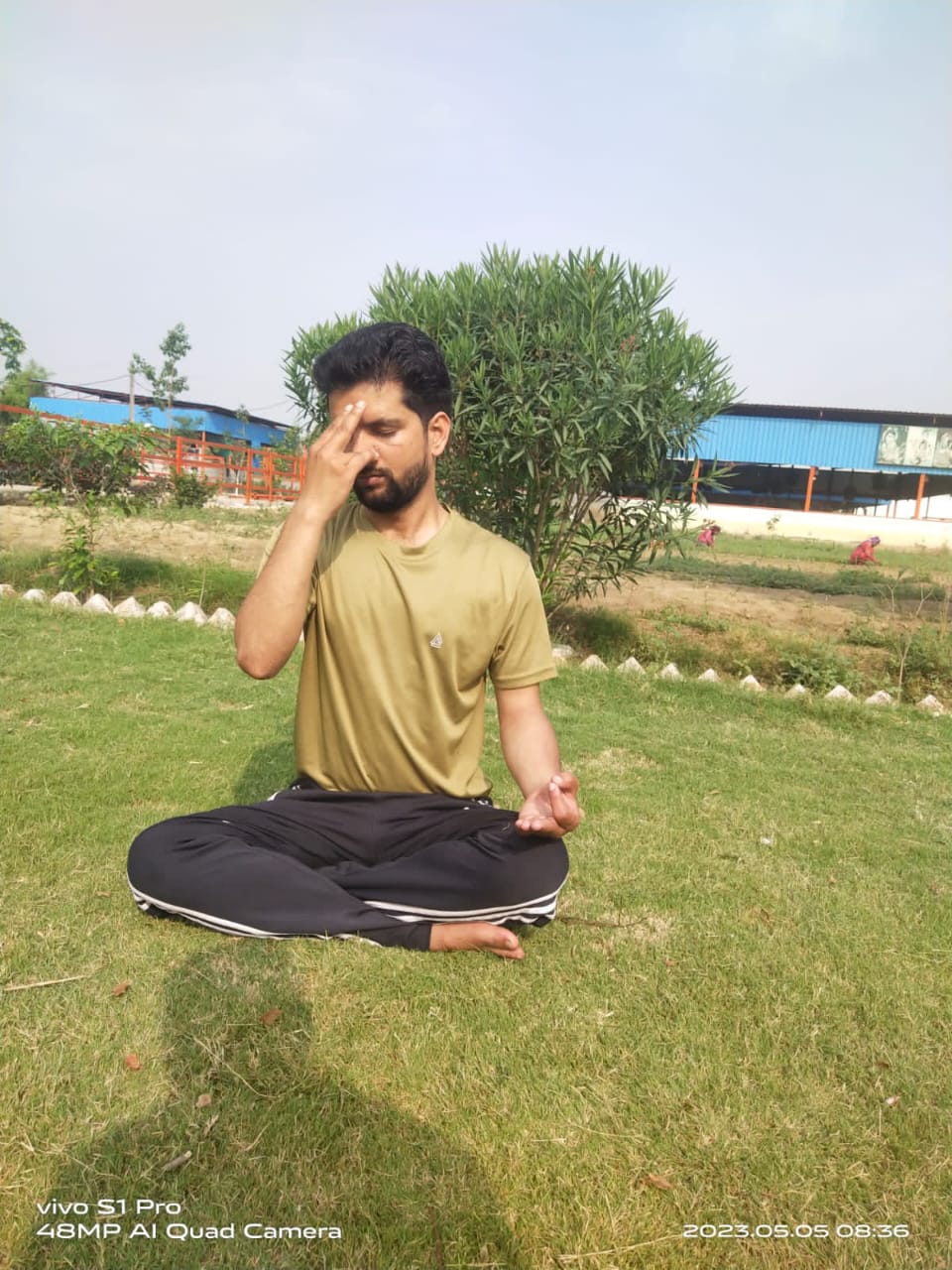
1. Anulom Vilom (Alternate Nostril Breathing)
Why it calms: The slow, even rhythm and the simple counting keep the mind occupied.
How to do it:
- Sit tall, left hand on the knee, right hand in Nasika Mudra (index and middle fingers folded, thumb and ring finger free).
- Close the right nostril and inhale slowly through the left for 4 counts.
- Close the left, open the right, and exhale for 4 to 6 counts.
- Inhale through the right, then switch and exhale through the left.
- That is one round. Do 5 to 10 rounds.
Tip: Skip breath holding at first. Keep the touch on the nose light.
2. Bhramari (Humming Bee Breath)
Why it calms: The long humming exhale gives the mind a sound and a vibration to follow, which makes it hard to keep thinking in circles.
How to do it:
- Sit comfortably, close your eyes, and rest your hands on your knees (or lightly place thumbs on the ear flaps).
- Inhale slowly through the nose for about 4 seconds.
- Exhale for 6 to 8 seconds with lips closed, making a steady, low “mmmm” hum.
- Feel the vibration in the face and skull.
- Repeat for 5 to 8 rounds.
Tip: Keep the hum soft. Louder is not better.
3. Ujjayi (Ocean Breath)
Why it calms: The slight narrowing at the throat creates a soft, steady sound like distant waves, which slows the breath and anchors attention.
How to do it:
- Sit tall and relax the jaw and shoulders.
- Breathe in through the nose and gently narrow the back of the throat, as if you were about to fog a mirror, but with your mouth closed.
- Breathe in and out through the nose with this soft, whispery sound.
- Keep both phases slow and even, about 4 to 5 seconds each.
- Continue for 3 to 5 minutes.
Tip: If the sound is harsh or your throat feels strained, ease off.
4. Dirgha (Three-Part Deep Belly Breath)
Why it calms: Deep, belly-led breathing counters the shallow chest breathing that comes with stress, and extending the exhale adds to the slowing effect.
How to do it:
- Sit or lie down comfortably. Place one hand on the belly and one on the chest.
- Inhale through the nose, first filling the belly, then the ribs, then the upper chest.
- Exhale slowly in the reverse order, letting the belly draw in at the end.
- Aim for a 4-count inhale and a 6-count exhale.
- Repeat for 5 minutes.
Tip: If you feel lightheaded, return to normal breathing and shorten the counts.
5. Sheetali (Cooling Breath)
Why it calms: The cooling sensation and the slow, deliberate inhale make it a soothing practice, especially in hot weather or when feeling irritable.
How to do it:
- Sit tall. Curl the sides of your tongue into a tube and extend it slightly past the lips. (If you cannot curl your tongue, press the teeth lightly together and inhale through the gaps, which is Sheetkari.)
- Inhale slowly through the tongue or teeth, feeling the cool air.
- Close the mouth and exhale slowly through the nose.
- Repeat for 5 to 8 rounds.
Tip: Avoid this practice in cold weather, or if you have a cold, cough, or asthma flare-up.
What Does the Research Say?
Most pranayama research is small and uses different techniques, so results are hard to compare. Here is what the evidence shows, with links to the sources.
1. A 2025 meta-analysis points to short-term benefits for mental health. A meta-analysis of six randomized controlled trials included 517 patients with PTSD, depression, and mixed mental disorders. It suggested short-term effects of pranayama when added to outpatient and inpatient care, and compared with standard care the results were comparable in reducing symptom severity. This supports pranayama as a helpful addition to care, not a replacement for it.
Source: Effectiveness of pranayama for mental disorders: a systematic review and meta-analysis of randomized controlled trials (Frontiers in Psychiatry, 2025)
2. A systematic review found physiological and psychological benefits, with a caveat. A systematic review of controlled human trials, including 13 randomized trials, concluded that available evidence indicates physiological and psychological benefits, but that more high-quality randomized trials are needed for definitive evidence.
Source: Exploring the Therapeutic Benefits of Pranayama (Yogic Breathing): A Systematic Review (PMC)
3. Twelve weeks of slow breathing reduced psychological stress. In a randomized, single-blinded trial of 100 healthy adults, regular slow breathing practice significantly reduced psychological stress measured by anxiety scores, but did not significantly change physiological stress measured by heart rate variability. The researchers also compared a longer exhale with an equal inhale and exhale and found no significant difference in stress reduction between the two ratios. In other words, slow breathing helps, and you do not need to obsess over exact ratios.
Source: Slow breathing for reducing stress: The effect of extending exhale (Complementary Therapies in Medicine, 2023)
How to Read This Research
The pattern is consistent but modest: slow breathing practices tend to lower self-reported stress and anxiety, though the studies are small and the techniques vary. Sheetali has little formal research behind it, so its benefits rest mainly on tradition and practitioner experience. Treat these practices as low-risk tools for calm, not treatments.
Personal Yoga Classes at Home
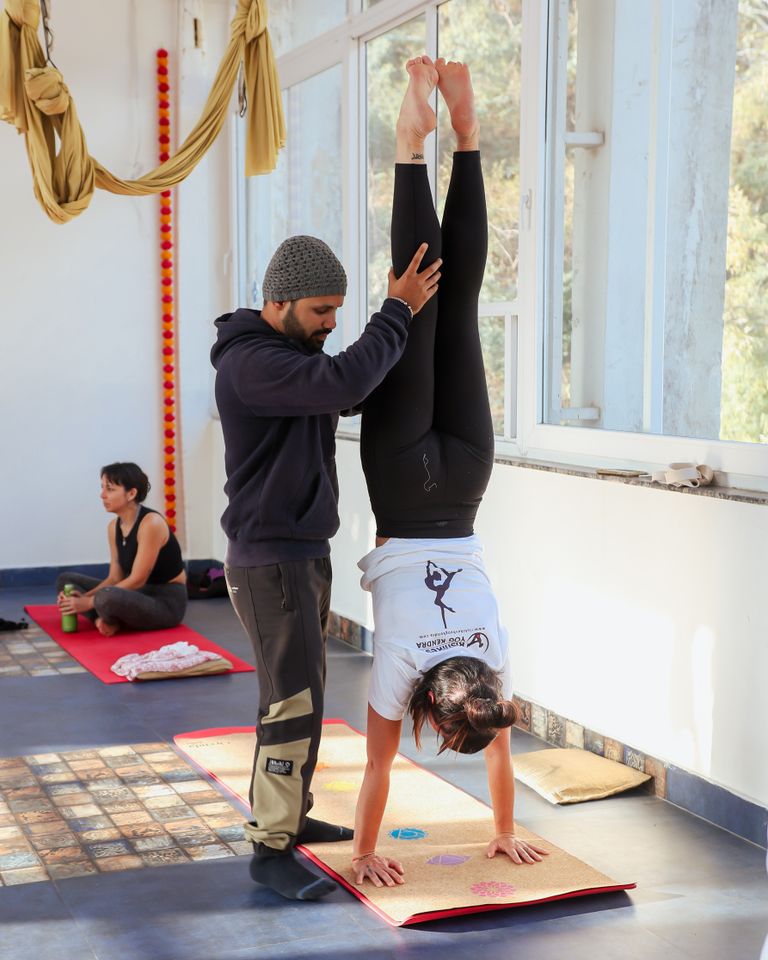
Learning pranayama from a video can work, but small technique errors are easy to miss: pinching the nose too hard, forcing the exhale, lifting the shoulders, or breathing too fast. Personal yoga classes at home put a trained instructor in your own space to watch your breathing, correct your posture, and choose practices that suit your health and experience, so you build the habit safely from the start.
A private session also fits around your day without travel or a crowded room, which makes consistency much easier. A good instructor will ask about your medical history, adapt each practice to you, and give you a short routine to repeat between classes. If you have high blood pressure, a heart or lung condition, or are pregnant, check with your doctor first and tell your instructor so every practice can be adjusted.
A Simple 10-Minute Calming Routine
- Dirgha breathing (3 minutes): settle the breath.
- Anulom Vilom (4 minutes): steady the mind.
- Bhramari (3 minutes): finish with sound and stillness.
Then sit quietly for a minute and notice how you feel.
Tips for Best Results
- Practice daily, even for ten minutes. Short and regular beats long and rare.
- Empty or light stomach. Wait 2 to 3 hours after a meal.
- Quiet, ventilated space with a comfortable seat and straight spine.
- Keep the breath smooth. If it feels strained, shorten the count.
- Skip breath holding until the basics feel easy.
- Evenings work well for these calming practices, especially before sleep.
Who Should Be Careful
These practices are gentle, but check with your doctor before starting if you have high or low blood pressure, heart disease, asthma or other lung conditions, epilepsy, an ear infection (for Bhramari), or are pregnant. If you have anxiety or panic tendencies, keep sessions short and stop if focusing on the breath increases discomfort. Stop immediately if you feel dizziness, chest tightness, or numbness.
The Bottom Line
You do not need an hour or special equipment to calm the mind. Five minutes of slow, smooth breathing, done regularly, is a reasonable place to start. The research is encouraging but still developing, so treat pranayama as a supportive habit alongside sleep, movement, and good care, not a cure.
Pick one or two practices from this list, do them daily for two weeks, and notice what changes.