
Yoga for Constipation
Yoga for Constipation: 5 Gentle Practices, What Helps, and What Doesn’t
Constipation is rarely a problem you can fix with one pose. It usually comes from a mix of low fiber, too little water, long hours of sitting, stress, irregular toilet habits, and sometimes medicines or medical conditions. Yoga can support the routine side of that: it moves the abdomen, encourages walking-style activity, and calms the stress that often disrupts digestion.
This guide covers five gentle practices, a short routine, daily habits that matter more than any pose, and an honest look at what the research does and does not show.
Before You Begin
- Practice on an empty or light stomach, ideally in the morning after a glass of water. Vajrasana (below) is the one exception and is traditionally done after meals.
- Move slowly. Gentle pressure on the abdomen is the goal, not deep stretching.
- Keep breathing steady and do not strain.
- Use a mat and loose clothing around the waist.
- Skip or modify any pose that causes pain, pulling, or discomfort.
See a doctor before relying on yoga if you have:
- Blood in the stool or black stools
- Unexplained weight loss
- Severe or worsening abdominal pain
- Vomiting, or a swollen, hard belly
- A sudden change in bowel habits that lasts more than a few weeks
- Constipation that keeps returning despite diet and lifestyle changes
1. Pawanmuktasana (Wind-Relieving Pose)
Why it helps: Drawing the knees toward the abdomen gently compresses the belly and is traditionally used to ease gas and bloating.
How to do it:
- Lie on your back with legs extended.
- Exhale and draw the right knee toward the chest, holding it with both hands.
- Hold for 5 to 6 breaths, then release and repeat on the left.
- Next, bring both knees to the chest and hold for 5 to 6 breaths.
- Do 3 rounds.
Tip: Keep the neck relaxed. Skip the head-lifting variation if your neck is sore.
2. Malasana (Garland Pose or Yogic Squat)
Why it helps: The deep squat mimics the natural position for passing stool and opens the hips and pelvic area.
How to do it:
- Stand with feet slightly wider than the hips, toes turned out.
- Bend the knees and lower the hips toward the floor, keeping the heels down if possible.
- Bring the palms together at the chest and press the elbows lightly against the inner knees.
- Hold for 30 to 60 seconds, breathing slowly.
- Repeat 2 or 3 times.
Tip: If your heels lift or your knees complain, sit on a folded blanket or block, or hold a wall for support. Avoid this pose with knee injuries, and check with your doctor if you are pregnant.
3. Ardha Matsyendrasana (Seated Spinal Twist)
Why it helps: The gentle twist compresses and releases the abdomen, which many practitioners use to stimulate digestion.
How to do it:
- Sit with legs extended and spine tall.
- Bend the right knee and place the foot outside the left thigh.
- Place the left elbow outside the right knee or hug the knee.
- Inhale to lengthen, exhale to twist to the right, keeping the spine upright.
- Hold for 5 to 8 breaths, then switch sides.
Tip: Twist from the middle of the spine, not by forcing the shoulders. Avoid deep twists with a hernia, recent abdominal surgery, or pregnancy.
4. Vajrasana (Thunderbolt Pose)
Why it helps: It is the one yoga pose traditionally practiced right after eating, and many people find that sitting in it for a few minutes after a meal supports comfortable digestion.
How to do it:
- Kneel and sit back on your heels, knees together, spine tall.
- Rest hands on thighs, shoulders relaxed.
- Breathe naturally and sit quietly for 5 to 10 minutes after a meal.
Tip: Place a folded blanket under the knees or between the thighs and calves if your knees or ankles hurt. Skip it if you have knee or ankle injuries.
5. Bhujangasana (Cobra Pose)
Why it helps: A gentle backbend stretches the front of the abdomen and applies mild pressure on the belly as you lie on it.
How to do it:
- Lie on your stomach, legs together, palms under the shoulders.
- Inhale and lift the chest, keeping the elbows slightly bent and the lower body on the floor.
- Keep the shoulders away from the ears and the gaze forward.
- Hold for 15 to 20 seconds, then lower.
- Repeat 3 times.
Tip: Lift only as far as feels comfortable. Avoid this pose with a hernia, recent abdominal surgery, pregnancy, or back injury.
A Simple 12-Minute Morning Routine
- Drink a glass of water, then wait a few minutes.
- Pawanmuktasana: 3 minutes
- Malasana: 2 minutes (in 2 or 3 holds)
- Ardha Matsyendrasana: 2 minutes (both sides)
- Bhujangasana: 3 rounds of 15 seconds
- Lie on your back and breathe slowly for 2 minutes
After meals, sit in Vajrasana for 5 minutes. Try to keep the same time each day, because a regular routine helps the bowels settle into a pattern.
Habits That Matter More Than Any Pose
- Eat fiber: vegetables, fruit, whole grains, lentils, and seeds. Increase gradually to avoid bloating.
- Drink enough water through the day.
- Walk daily. Even 20 to 30 minutes helps more than most people expect.
- Do not ignore the urge. Holding it in makes constipation worse.
- Set a toilet routine, such as 10 minutes after breakfast, without straining or rushing.
- Manage stress and sleep. Both affect digestion.
- Review your medicines with your doctor, since some commonly cause constipation.
Common Mistakes
- Expecting a pose to fix it overnight. Bowel habits change over weeks, not hours.
- Forcing twists and forward folds. Pressure should be gentle.
- Straining on the toilet because yoga “should have worked.”
- Skipping fiber and water and relying on yoga alone.
- Using laxatives or herbal remedies without advice. Check with your doctor first.
- Ignoring warning signs like blood in the stool or sudden changes.
Personal Yoga Classes at Home for Better Digestion
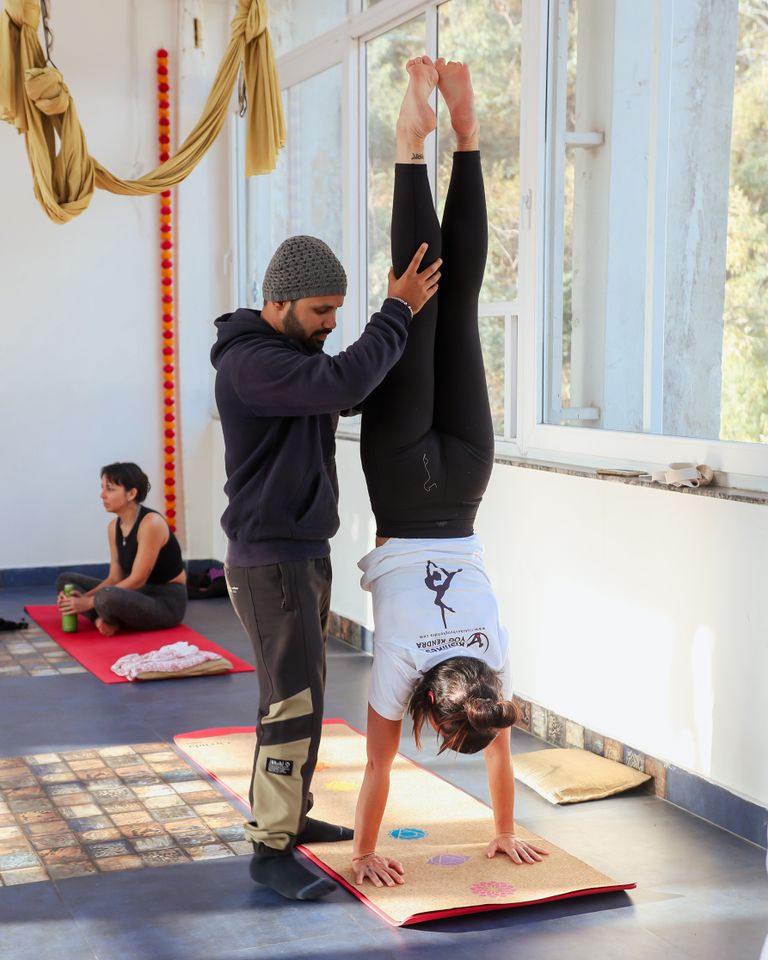
Digestive routines are personal, and so is the right practice. A pose that suits one person can be uncomfortable for another, especially if you have knee, back, or abdominal sensitivity. A trainer at home can show you how much pressure and depth is right for your body, correct your alignment in poses like Malasana and the seated twist, and swap in modifications with props or shorter holds so you stay comfortable.
A personal class also lets you build the session around your daily schedule, such as a short morning routine before breakfast and a simple post-meal practice, and a good instructor will ask about your health history first. They can give you a brief routine to repeat daily between sessions, which is what makes any gentle practice effective. Tell your instructor about your symptoms, medicines, and any diagnosis, and check with your doctor first if your constipation is persistent, painful, or comes with other symptoms. A personal class supports a healthy routine but does not replace medical care.
What Does the Research Say?
Here is the honest picture: I did not find solid trials testing yoga for constipation on its own. The closest evidence comes from studies on irritable bowel syndrome (IBS), where constipation is a common symptom, and the results are mixed. Here is what exists, with links.
1. A 2025 meta-analysis found no significant benefit overall. A systematic review and meta-analysis of 11 randomized controlled trials with 535 IBS patients found no significant difference between yoga and control groups in gastrointestinal symptom severity, anxiety, depression, or quality of life. The authors cited major differences between studies and a high risk of bias, and said yoga cannot be recommended as an IBS treatment until larger trials are done.
Source: Yoga for Irritable Bowel Syndrome: A Systematic Review and Meta-Analysis of Randomized Controlled Trials (American Journal of Gastroenterology, 2025)
2. An earlier review found possible benefit as an add-on. A systematic review of six randomized trials with 273 IBS patients found evidence that yoga was better than conventional treatment for reducing bowel symptoms, IBS severity, and anxiety, and that no adverse events were reported in the two trials that tracked safety. The authors concluded yoga might be a feasible and safe adjunctive treatment, but made no recommendation for routine use because of major flaws in study methods.
Source: Yoga for Irritable Bowel Syndrome: A Systematic Review of Randomized Controlled Trials (Clinical Gastroenterology and Hepatology, 2016, PubMed)
3. A 2025 review describes the evidence as preliminary. A newer systematic review of yoga for IBS included a study in which patients, after drinking water, performed five specific yoga poses and self-reported improvement in constipation, using no standardized score. Coverage of the review describes its findings as preliminary and says it does not establish yoga as a proven treatment.
Source: The Effectiveness of Yoga for Irritable Bowel Syndrome: A Systematic Review (PMC)
How to Read This Research
Yoga looks safe in these studies, and some report symptom improvement, but the evidence is weak and does not show it treats constipation. Treat yoga as a gentle support alongside fiber, water, walking, and a regular routine, not as a cure. Those studies were also in people with IBS, so the results may not apply to everyone with constipation.
The Bottom Line
A few gentle poses, a glass of water, a daily walk, and a regular toilet routine make a sensible plan for mild, occasional constipation. Yoga may help you relax and move more, but the science does not show it fixes constipation by itself.
If symptoms are persistent, painful, or come with blood, weight loss, or vomiting, see a doctor rather than relying on poses.